Are you drawn to open land and privacy, or do you want a more connected daily routine with quick access to shops, major roads, and local services? In Clifton Park and Halfmoon, that choice is less about picking one town over the other and more about understanding where each setting shows up on the map. If you are comparing country-style estates with suburban enclaves in southern Saratoga County, this guide will help you see how the landscape, planning patterns, and ownership details shape the decision. Let’s dive in.
Why this comparison matters
Clifton Park and Halfmoon sit side by side, but they offer different living patterns. Census data shows Clifton Park is the larger town at 48.20 square miles, with an estimated 2024 population of 37,901, while Halfmoon spans 32.58 square miles with an estimated population of 26,567.
The same data also shows Clifton Park has a higher owner-occupied housing rate at 83.2% compared with 67.2% in Halfmoon. Median household income is also higher in Clifton Park at $133,359 versus $100,712 in Halfmoon, and the median value of owner-occupied homes is slightly higher at $395,400 compared with $387,700.
Those numbers point to two established suburban markets, but not identical ones. Clifton Park reads as the more owner-occupied and higher-income of the two, while Halfmoon shows a somewhat more mixed pattern of growth and housing.
Clifton Park and Halfmoon at a glance
Clifton Park’s east-west split
Clifton Park’s planning documents describe a very clear east-west divide. The eastern side, running parallel to the Northway, is mainly residential and includes the town’s major commercial areas.
The western side retains a more rural residential, agricultural, and recreational character. The town also notes that roughly 90% of its population lives in the east half on about half of the developable acreage, which helps explain why the western side often feels more open and less built out.
Halfmoon’s growth and open-space balance
Halfmoon’s planning framework takes a broader systems view. Its adopted 2025 comprehensive plan update is designed to guide land use, infrastructure, transportation, neighborhoods, the environment, and housing together.
That matters because Halfmoon is balancing ongoing growth with open-space protection. The town’s planning materials state plainly that Halfmoon is no longer a rural community, even though it still places value on open space and rural character.
Where country-style estates fit best
Western Clifton Park offers the strongest rural feel
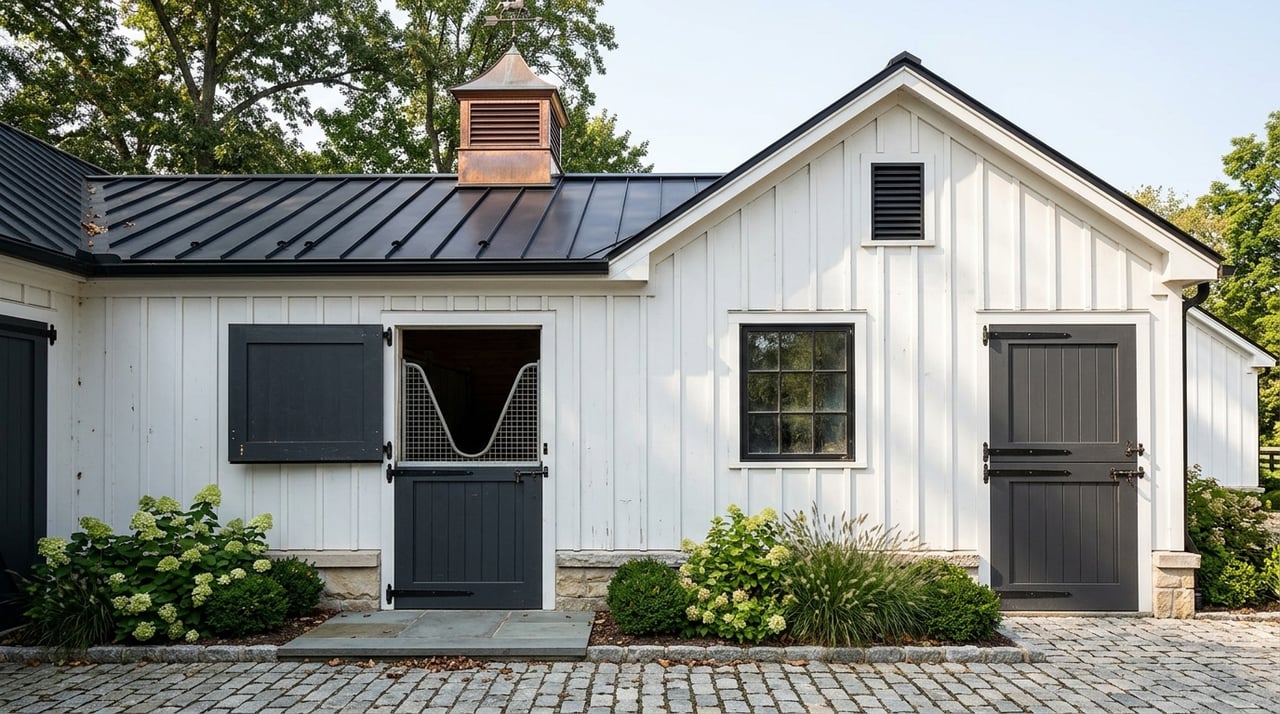
If your idea of an estate includes more acreage, privacy, tree cover, or open fields, western Clifton Park is the clearest match in this comparison. Town planning documents describe that part of Clifton Park as rural residential, agricultural, and recreational, and current town efforts continue to support open-space protection, farmland protection, and scenic character.
That pattern can be especially appealing if you value a sense of retreat while still staying within the Clifton Park market. It also aligns with buyers who think in terms of stewardship, long views, and land as part of the property’s identity.
Halfmoon has estate-like pockets, not a fully rural identity
Halfmoon can still offer estate-style settings, but they tend to be more pocketed and shaped by environmental and conservation features. The town’s natural-resources planning highlights wetlands, steep slopes, forested land, stream corridors, prime farmland, and wellhead-protection areas.
The northwestern quadrant contains much of Halfmoon’s agricultural land. At the same time, the town’s planning documents make clear that Halfmoon does not function as a broadly rural town today, so estate buyers usually need to look more carefully for the right parcel or setting.
Where suburban convenience is strongest
Clifton Park’s corridor is established and connected
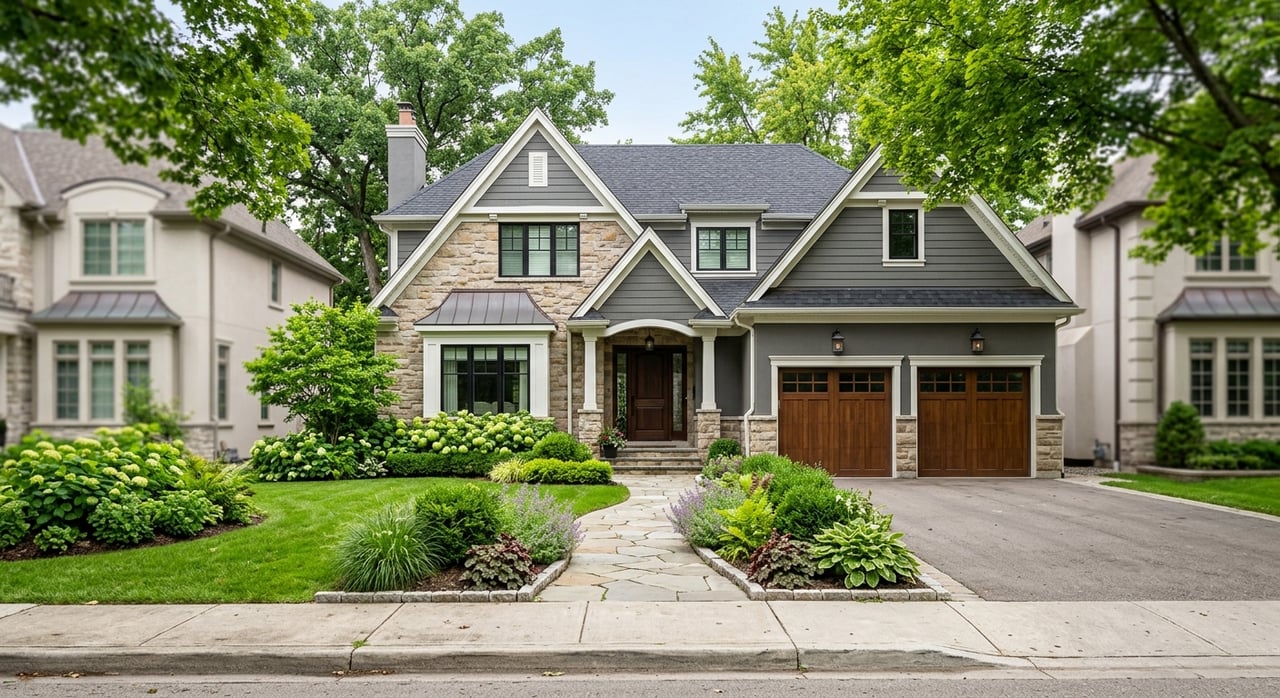
For buyers who want convenience, Clifton Park’s strongest suburban zone centers on the Exit 9, Route 9, and Route 146 corridor. The town identifies this area as its principal commercial growth area, and current improvements show ongoing investment in walkability.
New sidewalks and bike paths on Route 146, Route 146A, and Vischer Ferry Road, along with a trail network expanded since 2000, reinforce that connected suburban feel. Access to shopping, services, and the highway network is one of Clifton Park’s clearest advantages, though it often comes with less land and fewer estate-style buffers.
Halfmoon’s southwest corridor is more corridor-driven
In Halfmoon, the strongest suburban character appears in the southwest corridor around Route 9, Route 146, and Route 236. The town’s open-space plan describes this as the most developed part of Halfmoon, with small lot sizes and higher density south of Route 9.
The same planning materials identify a dense residential pocket in the triangle bounded by US 9 and Routes 146 and 236. For some buyers, this creates a practical everyday setup with straightforward road access, but it can also mean more exposure to traffic and a more built-up setting.
How lifestyle goals shape the right choice
Choose country-style estates for space and privacy
If you want room to spread out, country-style properties are generally the stronger fit. In this area, that usually means focusing on western Clifton Park first, then looking at select open-resource areas in Halfmoon where large parcels and natural buffers still exist.
This choice often appeals to buyers who value privacy, outdoor space, and a property that feels distinct from a typical subdivision pattern. It can also suit buyers looking for land-sensitive uses, legacy ownership, or a setting with a quieter visual rhythm.
Choose suburban enclaves for access and ease
If your top priority is a smoother daily routine, the suburban corridors may make more sense. Clifton Park’s established commercial and trail network and Halfmoon’s southwest corridor both support easier access to roads, services, and everyday destinations.
That can be especially important if you commute often or prefer less isolation. The tradeoff is usually smaller lots, closer neighbors, and a setting where convenience plays a larger role than seclusion.
Ownership details buyers should review closely
Utility availability can vary by parcel
One of the most important practical issues is utility service. Clifton Park’s western side still lacks water and sewer services in the planning documents, and Halfmoon also identifies extension of water and sewer as an important issue for residents not already served.
That means you should verify utility availability property by property rather than assume a standard setup. Where municipal service is absent, more due diligence on private infrastructure may be needed.
Road maintenance is not the same everywhere
Road responsibility also varies based on whether a road is maintained by the town, county, or state. Clifton Park’s highway department states that it maintains town roads, while Route 9, Route 146, Route 146A, and I-87 are state roads.
Halfmoon separates maintenance the same way and lists Route 9, Route 146, Route 236, and Crescent and Vischer Ferry Road as NYSDOT-maintained. This matters because plowing, paving, and service response can differ depending on the road classification.
Easements can protect and limit
Both towns use conservation easements, farmland-protection tools, open-space plans, and purchase-of-development-rights strategies. These measures can help preserve views, privacy, and long-term character, which many estate-minded buyers value.
At the same time, they may limit future subdivision potential, additions, or outbuildings. If you are buying with long-range plans in mind, deed restrictions and easements deserve an early and careful review.
Environmental conditions deserve early review
Halfmoon’s planning documents specifically highlight wetlands, floodplains, stream corridors, steep slopes, and wellhead-protection areas as important land-management issues. Clifton Park’s current conservation work places emphasis on riverfront areas, farmland, and preserve connections.
If a parcel sits near water, wooded corridors, ravines, or protected open space, it is wise to review drainage, buffers, and buildability early in the process. These features can be part of what makes a property beautiful, but they can also shape what is possible on the land.
Which town feels like the better fit?
Clifton Park feels more established
Clifton Park stands out as the more established and trail-rich option in this comparison. It offers a clearer split between country-style settings in the west and suburban convenience in the east, which can make the search easier if you already know your priorities.
For buyers seeking a polished suburban base with access to trails and services, or a more pastoral western setting within the same town, Clifton Park presents a strong two-part identity.
Halfmoon feels more transitional
Halfmoon reads as a town still actively balancing development pressure with open-space protection. Its suburban character is strongest in the southwest corridors, while estate-like opportunities tend to depend more on finding the right pocket of land near conservation or agricultural areas.
That can appeal to buyers who are comfortable with a more corridor-oriented growth pattern and who want to study parcel details closely. In the right location, Halfmoon can offer a compelling blend of access and landscape, but it usually requires a more targeted search.
Final thoughts on country vs. suburban estates
The real choice between Clifton Park and Halfmoon is not simply town versus town. It is geography, land pattern, and daily lifestyle. Western Clifton Park and select open-resource areas of Halfmoon are the better fit for acreage, privacy, and a more pastoral feel, while the Exit 9, Route 9, Route 146, and Route 236 corridors are where convenience and everyday access are strongest.
If you are searching for a property defined by place, setting, and long-term stewardship, this is a market where local context matters. The right estate is not just about square footage or price point. It is about how the land, infrastructure, and future planning path align with the life you want to build there.
If you are weighing estate living in Clifton Park or Halfmoon and want a more tailored, property-by-property perspective, Horse and Home Estates offers a concierge approach grounded in Saratoga-region knowledge, thoughtful guidance, and a deep respect for place.
FAQs
What areas in Clifton Park are best for country-style estates?
- Western Clifton Park is the strongest match for country-style estates because town planning documents describe that side as rural residential, agricultural, and recreational, with ongoing open-space and farmland-protection efforts.
What areas in Halfmoon are most suburban in character?
- Halfmoon’s southwest corridor around Route 9, Route 146, and Route 236 is the town’s most developed suburban area, with smaller lot sizes and higher-density residential patterns.
How do Clifton Park and Halfmoon compare on homeownership and income?
- Census figures show Clifton Park has a higher owner-occupied housing rate at 83.2% compared with 67.2% in Halfmoon, and a higher median household income at $133,359 versus $100,712.
What should buyers verify about utilities in Clifton Park and Halfmoon?
- Buyers should verify water and sewer availability for each parcel because parts of western Clifton Park still lack those services in planning documents, and Halfmoon identifies utility extension as an ongoing local issue.
Why do easements matter for estate properties in Saratoga County?
- Easements and preservation tools can help protect views, privacy, and long-term character, but they may also limit future additions, outbuildings, or subdivision potential, so they should be reviewed carefully early on.