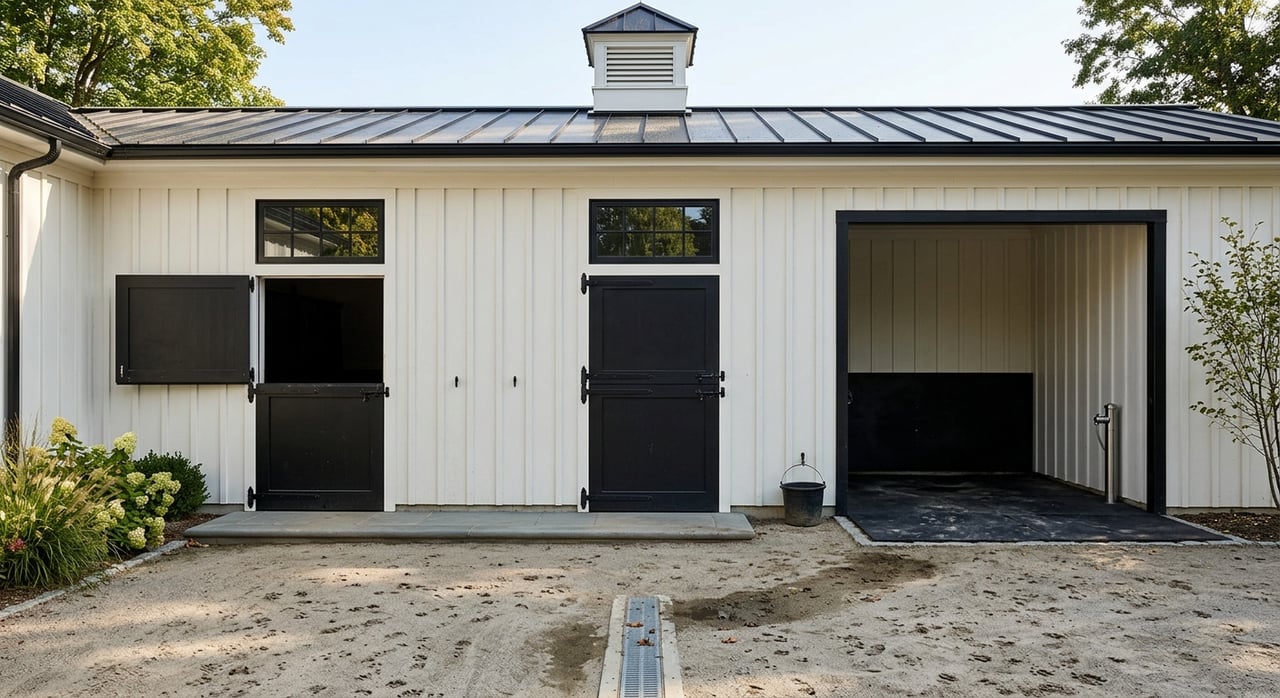
If you are searching for a Saratoga Gateway horse property, it is easy to fall for the view first. Rolling fields, a classic barn, and a tidy fence line can look perfect at a glance. But in Saratoga Springs, the right horse property is not just about charm. It is about how the land, zoning, barn setup, and long-term use all fit your goals. Let’s dive in.
Start With Your Actual Horse Plan
Before you focus on finishes or curb appeal, get clear on how you want to use the property. A private setup for your own horses has very different needs than a property you may one day use for boarding, training, or lessons. That difference matters in Saratoga Springs, where the legal rules can change what is possible on a given parcel.
Saratoga County has a meaningful equestrian footprint. A county economic report identified 77 horse-farm parcels in county tax records, and horse farms accounted for about 39% of agricultural land value while making up about 11% of agricultural acreage. That tells you something important about this market: horse properties here are not niche afterthoughts. They are a distinct and valuable part of the local landscape.
Check Zoning Early
In Saratoga Springs, the Unified Development Ordinance is the rule book for land development, including zoning, subdivision, and stormwater standards. If you are looking within the city, you should confirm what the parcel allows before assuming the current setup matches your future plans. That step can save time, money, and frustration.
For private horse stables in the city’s residential districts, the code requires 20,000 square feet of lot area per horse. The code also prohibits boarding, breeding, horse shows, and horse auctions as part of a private stable use. In other words, a parcel that works for your own horses may not work for a more commercial equestrian program.
That distinction becomes even more important if you are comparing a quiet private farm with a property intended for lessons or boarding. The city separately defines a riding stable as a place that provides riding instruction and boarding of horses where horses may be hired for riding. If your long-term vision includes income-producing equestrian use, it is wise to confirm legal fit from the start rather than assume you can adapt later.
Match Acreage to Daily Use
There is no single acreage formula that fits every horse property. The right amount of land depends on whether your horses will graze, rotate through turnout, or spend most of their time in dry lots or sacrifice paddocks. A beautiful small farm can work well for private ownership if the layout supports safe daily management.
New York State guidance says a commercial horse boarding operation or commercial equine operation must have at least seven acres and at least ten horses to qualify as a farm operation. The same guidance notes that if pasture is expected to feed the horses, about one acre per horse is usually appropriate, while turnout-only land can support more horses per acre. That means you need to look beyond the listing’s total acreage and ask how much of the land is actually usable.
Penn State Extension offers another practical benchmark. Well-managed turnout pasture often needs about 2 to 4 acres per horse if you want horses out full time without overgrazing. By contrast, less than an acre per horse is usually more like exercise space than a feed-producing pasture system.
Know the Difference Between Pasture and Exercise Space
This is one of the most important questions you can ask when touring a property: is the land set up for real turnout, or just limited exercise? Those are not the same thing. A field may look generous in spring, yet still be too small or too stressed to support healthy pasture use through the season.
If your goal is grazing and rotational turnout, you will want to evaluate field condition, drainage, fencing layout, and how easily the acreage can be split into manageable sections. If your horses will live more on a dry lot system, then footing, mud control, and manure handling become even more important. The best property for you is the one that supports your program without pushing the land beyond what it can handle.
Look Beyond Stall Count
A barn can photograph beautifully and still function poorly for horses. When you tour a Saratoga horse property, try not to stop at the number of stalls. The more useful question is whether the barn supports healthy airflow, efficient chores, and year-round management.
University of Minnesota Extension notes that horse barns need ventilation to remove moisture, prevent condensation, and maintain fresh air. Penn State Extension identifies inadequate ventilation as one of the most common mistakes in modern horse facilities. For light horses, Penn State says the minimum stall size is generally 10 by 10 feet, while 12 by 12 feet or larger is preferred.
Those numbers are a starting point, not the whole story. As you walk the barn, ask yourself whether the building breathes well in both summer and winter, whether the aisle stays dry, and whether tack and feed storage are kept separate. Also look at trailer access, driveway durability, and whether daily movement around the barn feels easy or awkward.
Pay Close Attention to Drainage and Stewardship
In a horse property, the land works hard every day. That is why drainage, runoff, and manure handling deserve as much attention as the house or barn style. A property with weak site management can create ongoing maintenance issues and wear down both pasture and paddocks over time.
The Natural Resources Conservation Service says a manure and nutrient plan serves as a guide for managing the resource base. Locally, Saratoga County’s Soil and Water Conservation District promotes conservation and farming as a preferred land use through the Agricultural Environmental Management framework and technical assistance. For you as a buyer, that means stewardship is not just a nice idea. It is a practical part of protecting the property’s long-term function and value.
When evaluating a parcel, look for signs that runoff is managed away from paddocks and barn entries. Notice whether high-traffic areas are holding up, and whether there is room for manure handling that does not interfere with turnout or neighbor relations. These are the details that shape daily life on a horse property.
Consider Agricultural District Context
In Saratoga County, the parcel’s broader setting can matter almost as much as the property itself. Saratoga County Consolidated Agricultural District #2 includes the City of Saratoga Springs and nearby towns such as Ballston, Charlton, Clifton Park, Galway, Malta, and Milton, among others. Buyers are often comparing not only the land but also whether a property sits inside an agricultural district.
That matters because agricultural districts can come with related protections and incentives. Saratoga County’s agricultural district program provides qualifying farm operations with partial real-property tax relief and protections against overly restrictive local laws. If you are weighing a long-term equestrian use, this context is worth reviewing early in your search.
Think About Future Flexibility
Your first use of a horse property may not be your only use. You may begin with private ownership and later consider boarding, training, or teaching. Or you may want to assemble additional turnout or hay ground over time.
New York guidance notes that farm operations can consist of one or more owned or rented parcels, whether contiguous or not. That can be useful if your long-term plan includes expanding your land base gradually. It also reinforces why you should think beyond today’s needs and ask whether the property gives you room to adapt thoughtfully.
Venue Access Matters in Saratoga
In the Saratoga Gateway area, location is not just about commute time or scenery. For many equestrian buyers, access to training and show venues is part of the property’s value. That is especially true in a region with deep ties to the horse world.
Saratoga Race Course remains the area’s flagship thoroughbred venue. NYRA’s 2026 summer meet is scheduled from July 3 through Labor Day, with 46 days of racing and more than 70 stakes races worth over $23 million in purses. If your focus is racing, conditioning, or proximity to the broader thoroughbred network, access to this ecosystem may influence your buying decision as much as acreage or barn style.
There are also horse-related events beyond the track. Saratoga County Fairgrounds in Ballston Spa includes a dedicated horse show ring and lists horse events on its calendar, including the North American 6 Horse Hitch Competition and gymkhana series dates. For riders who want nearby schooling or event access, that local infrastructure can add meaningful convenience.
Review Taxes and Structure Eligibility
Taxes and improvement costs should be part of your due diligence. In New York, newly constructed or reconstructed agricultural structures may qualify for a 10-year property tax exemption. That exemption ends if the structure stops being used for farming.
This is one more reason to confirm how the property is classified and how you intend to use it. State guidance explains that commercial horse boarding and commercial equine operations are treated as farm operations when they meet acreage, horse-count, and gross-receipts thresholds. If you think you may board, train, or teach in the future, it is wise to review whether the parcel is positioned for that use before you commit.
A Better Way to Evaluate a Saratoga Horse Property
As you compare properties, it helps to look at each one through a practical lens. Instead of asking only whether the farm is pretty or well located, ask whether it truly supports the life you want to live with horses. The right property should align with both your day-to-day needs and your longer-term stewardship goals.
A strong evaluation usually includes these questions:
- Is the current zoning compatible with your intended horse use?
- Does the acreage support pasture, turnout, or only limited exercise?
- Is the barn ventilated well and sized appropriately for your horses?
- Are drainage, runoff, and manure handling set up responsibly?
- Is trailer access workable in all seasons?
- Does the location support your training, racing, or showing priorities?
- If your plans change, is there a realistic path to future flexibility?
In a market like Saratoga, these are the questions that protect both lifestyle and investment. The most successful purchases are rarely the most impulsive. They are the ones made with clarity about land, use, and legacy.
If you are considering a Saratoga Gateway horse property, a measured, informed search can make all the difference. The right farm is not simply the one that looks the part. It is the one that supports your horses well, fits the local framework, and gives you confidence in the years ahead. For tailored guidance on Saratoga horse properties, legacy farms, and equestrian buying strategy, connect with Horse and Home Estates.
FAQs
What should I check first when buying a horse property in Saratoga Springs?
- Start with zoning and intended use. In Saratoga Springs, private horse stables in residential districts are allowed under specific rules, including lot area requirements per horse and limits on boarding and similar activities.
How much land do I need for horses on a Saratoga property?
- It depends on your goals. New York guidance says pasture intended to feed horses often needs about one acre per horse, while Penn State Extension says well-managed turnout pasture often needs about 2 to 4 acres per horse for full-time turnout without overgrazing.
Can a Saratoga Springs horse property be used for boarding or lessons?
- Not always. A parcel that allows private horse keeping may not allow boarding or riding instruction under the same rules, so you should confirm the property’s legal fit before purchase.
What barn features matter most on a Saratoga horse property?
- Good ventilation, practical stall sizing, dry circulation areas, separated feed and tack storage, and workable trailer access all matter. Barn function is often more important than appearance alone.
Why does an agricultural district matter for a Saratoga horse property?
- A property in an agricultural district may come with protections and incentives for qualifying farm operations, including partial real-property tax relief and protection against overly restrictive local laws.
What makes a Saratoga Gateway horse property a strong long-term fit?
- The best fit is a property that supports your current horse program, allows responsible land stewardship, and gives you realistic flexibility for future use if your plans evolve.